Ralf Seifert
Professor of Operations Management
Karlsruhe Institute of Technology
North Carolina State University
Stanford University, USA
Stanford University, USA
Winner of EFMD Case Writing Competition Awards (2003, 2009, 2012, 2018 and 2020)
ECCH Case Award winner (2006 and 2011)
Production and Operations Management Society award (2004)
Ralf Seifert is Professor of Operations Management. His primary research and teaching interests are operations management, supply chain strategy, and digital transformation. His work lies at the heart of one of the most important topics currently facing organizations, as supply chains come under strain due to multiple global changes. He has also worked on industry analysis, competitive strategy, and new venture formation.
Seifert says supply chain management has grown tremendously in importance in recent years, and the agenda for supply chain executives has expanded massively. They must now address topics such as digital transformation, supply chain resilience, and sustainability in addition to worries around cost pressure, inflation, and new geopolitical constraints.
Recent supply chain tensions have been triggered by strong demand for goods at a time of significant supply chain disruptions. It is not clear if the world will ever return to a situation in which just-in-time inventory management is seen as the holy grail. Executives will have to master more profound supply chain transformations to safeguard future operations, he says.
Many supply chain executives worry about things like inventory, facilities, and channels of distribution, while the real challenge is decision making and having the right processes and information in place to inform such decisions.
Seifert is Director of IMD’s Strategic Supply Chain Leadership (SSCL) program program, which addresses both traditional supply chain strategy and implementation issues concerning digitalization trends and new technologies. He also teaches in IMD’s MBA and Foundations for Business Leadership (FBL) programs and has designed and directed numerous company-specific general management programs.
He has actively coached more than 60 project teams and served as a consultant and speaker for various multinational companies. Based on his work with companies, he has co-authored more than 50 case studies on a wide range of organizations including adidas, HEINEKEN, Hema, Hilti, HP, LEGO, L’Oréal, Unilever, Sky Germany, Tetra Pak and Zalando. This work has been recognized by multiple international case awards.
Seifert has more than 100 articles and international conference presentations to his credit, including articles in Production and Operations Management, Operations Research, the European Journal of Operational Research, IIE Transaction, Research Policy, and the International Journal of Production Economics.
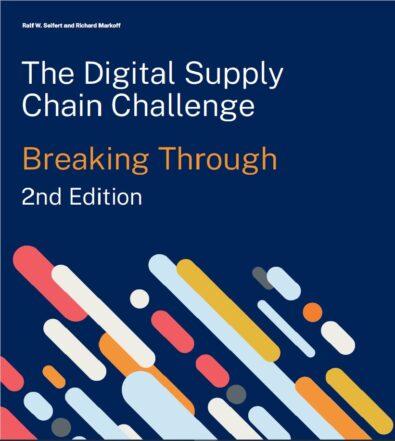
He has also co-authored three managerial books. His title The Digital Supply Chain Challenge: Breaking Through, first published in 2020 and now available in a substantially revised 2nd edition, serves as a handbook for supply chain executives navigating the complexities of digital transformation. The new edition expands on key frameworks and offers updated insights into the evolving digital landscape. His previous books focused on strategic supply chain management and the obstacles encountered by technology start-ups.
Alongside his role at IMD, he is a tenured professor at EPFL, the Swiss Federal Institute of Technology in Lausanne, where he has held the Chair of Technology and Operations Management since 2003.
Before joining IMD, Seifert studied and worked in Germany, Japan, and the US. While in the US, he consulted for Hewlett-Packard and served as a teaching and research assistant at Stanford University. In Germany, he worked for Booz & Company (now Strategy&), McKinsey & Company, and Freudenberg & Co. His studies included one year as a visiting scholar at Waseda University in Tokyo.
Looking back on recent supply chain disruptions, Richard Markoff and Ralf Seifert describe the current revolution in supply chain management. They illustrate how supply chain management is ever mor...
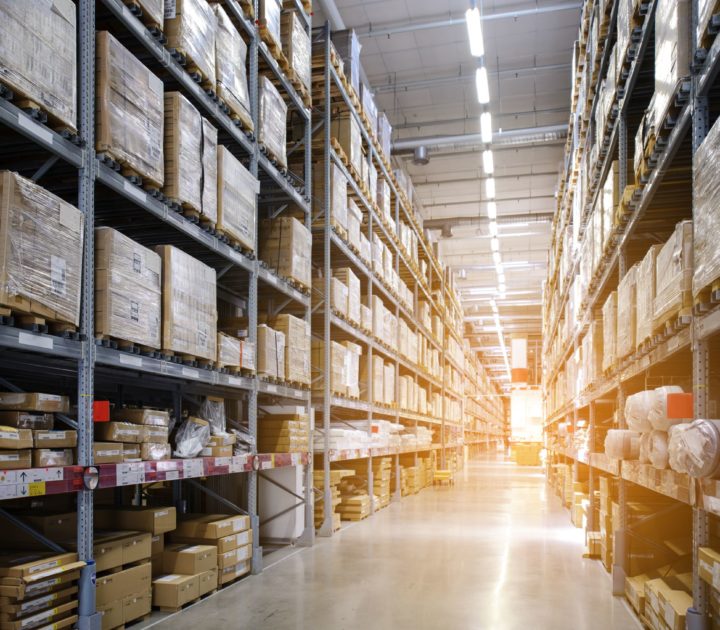

Amazon certainly has grabbed headlines and attention with its recent grocery moves. Some like Amazon Go, may prove to be genuine innovations. When looking at their recent moves with Amazon Fresh an...
As the manufacturing industry enters into the fourth industrial revolution or the Industry 4.0, supply chain leaders are challenged to make their enterprise processes more digitised – in order for ...
ABC classification: It is one of the oldest, most reliable methods for catalogue or customer segementation. It relies on the properties of the Pareto distribution, and states that about 20% of a po...
As concerns about sustainability rise, corporations are extending their efforts to improve their environmental performance. There aremajor challenges to overcome if firms are to operate sustainabil...
As part of the broader Industry 4.0 trend, the digitalisation of supply chains is happening quickly. Much of the attention is centred on innovations like cloud computing, software-as-a-service (Saa...
International smartphone brands such as Apple and Samsung dominated China’s smartphone market in its early stages. Then, Xiaomi and Huawei, two Chinese brands, changed the story. In 2015, Xiaomi an...
In the field of Sustainable Supply Chain Management it is well established that sustainability is a source of competitive advantage for companies. In the field of strategic management, capabilities...
This case won first place in the supply chain category of the European Foundation for Management Development (EFMD) case awards in 2011. It was produced as part of a research partnership among the ...