The Shorefast Foundation is a charitable organization that aims to spark a rural renaissance and promote economic and cultural resilience in the isolated communities of Fogo Island and Change Islands, Newfoundland, Canada, using a social entrepreneurship model. The cases also highlight the importance of rural places as repositories of local knowledge, culture and traditions. The two Shorefast cases illustrate the initial formation of the Foundation and the implementation issues surrounding the building of a multimillion dollar five star Inn. They are best used together as a series, but can be used independently as well. Case A provides information about the socioeconomic background of Fogo Island as well as an in depth profile of the founder of the Shorefast Foundation, Zita Cobb. The case illustrates how the founder of an organization can shape an organization’s goals, vision, and beliefs. It also describes the model of social entrepreneurship that was being proposed and the organizational structure of the Shorefast Foundation and its affiliates as it stood before the construction of the revenue-generating Inn.



Chinese EV leaders show how the Outpacing strategy uses fast evolutionary cycles to shift direction early and gain an edge over slower moving rivals.

But clinical psychologist Ingrid Clayton identifies a fourth survival strategy lurking in your neural circuitry that most leadership training misses – and it might be sabotaging your effectiveness.

Gloat’s Jeff Schwartz and Mike Worthington reveal how AI and skills-powered strategies are transforming talent management and workforce strategy.

Former Novo Nordisk CSO Marcus Schindler on R&D leadership, pharma innovation, scientific discovery, AI, global talent, DEI, biotech, drug development strategy.

Amy Bonsall and Alyson Meister show how to turn problems into opportunities through reframing your response to perceived threats.
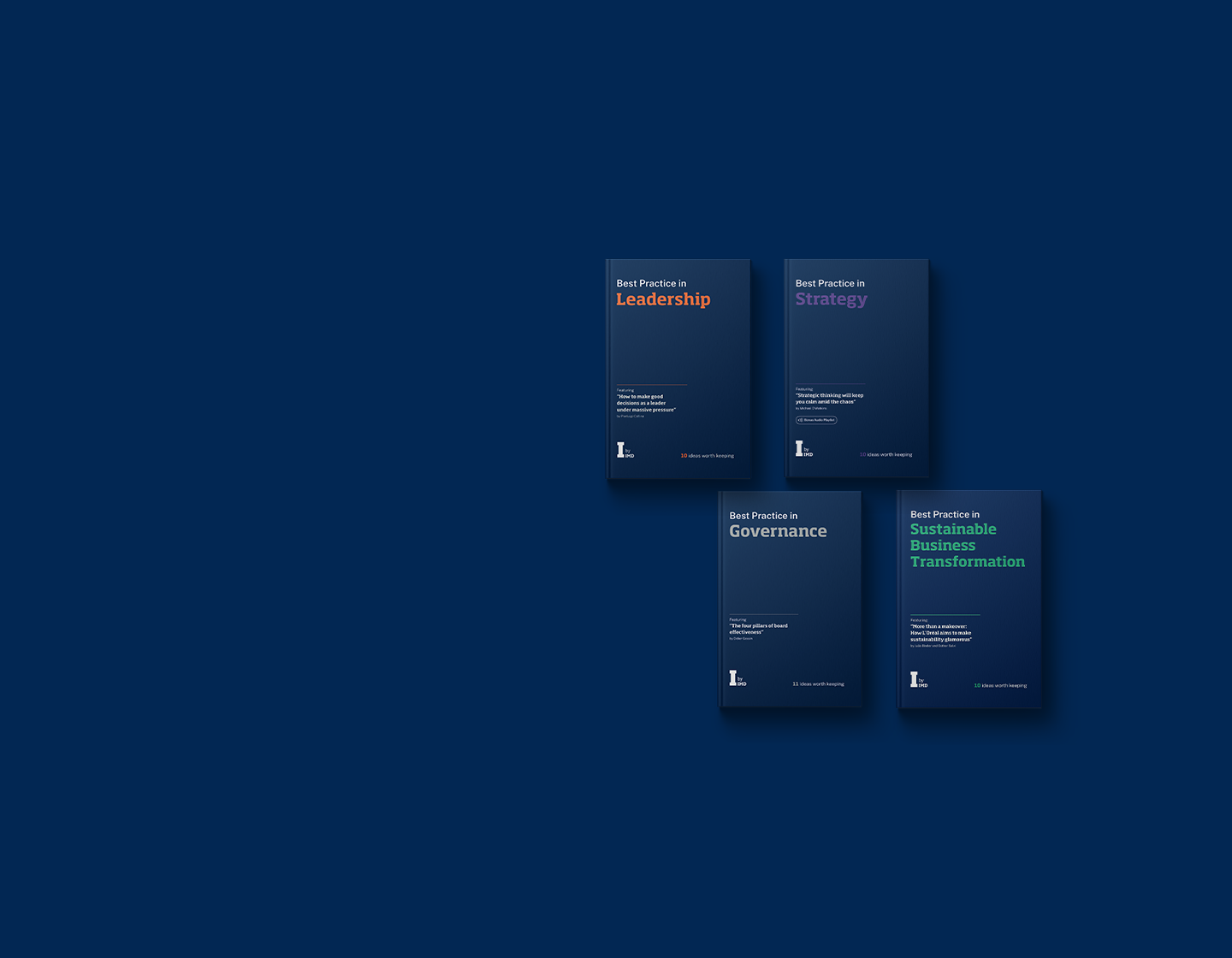
Discover the new I by IMD Best Practice book series: four essential guides on leadership, strategy, governance, and sustainable transformation. Actionable insights from world-class faculty.

Gaming has become one of the world’s most powerful consumer ecosystems. Stefan Michel explores why every company now needs a strategy for play to stay competitive.

Explore the accelerating energy transition as IMD hosts RWE’s Kunal Chandra to discuss clean energy investment, bottlenecks, and strategic choices for leaders.

Vinted founder Milda Mitkute shares how she turned a wardrobe cleanout into Lithuania’s first tech unicorn and why responsible growth matters.
Research Information & Knowledge Hub for additional information on IMD publications
Research Information & Knowledge Hub for additional information on IMD publications
Research Information & Knowledge Hub for additional information on IMD publications
Research Information & Knowledge Hub for additional information on IMD publications
Research Information & Knowledge Hub for additional information on IMD publications
Research Information & Knowledge Hub for additional information on IMD publications
Research Information & Knowledge Hub for additional information on IMD publications
Research Information & Knowledge Hub for additional information on IMD publications
Research Information & Knowledge Hub for additional information on IMD publications
Research Information & Knowledge Hub for additional information on IMD publications